proof of work, not promise of work
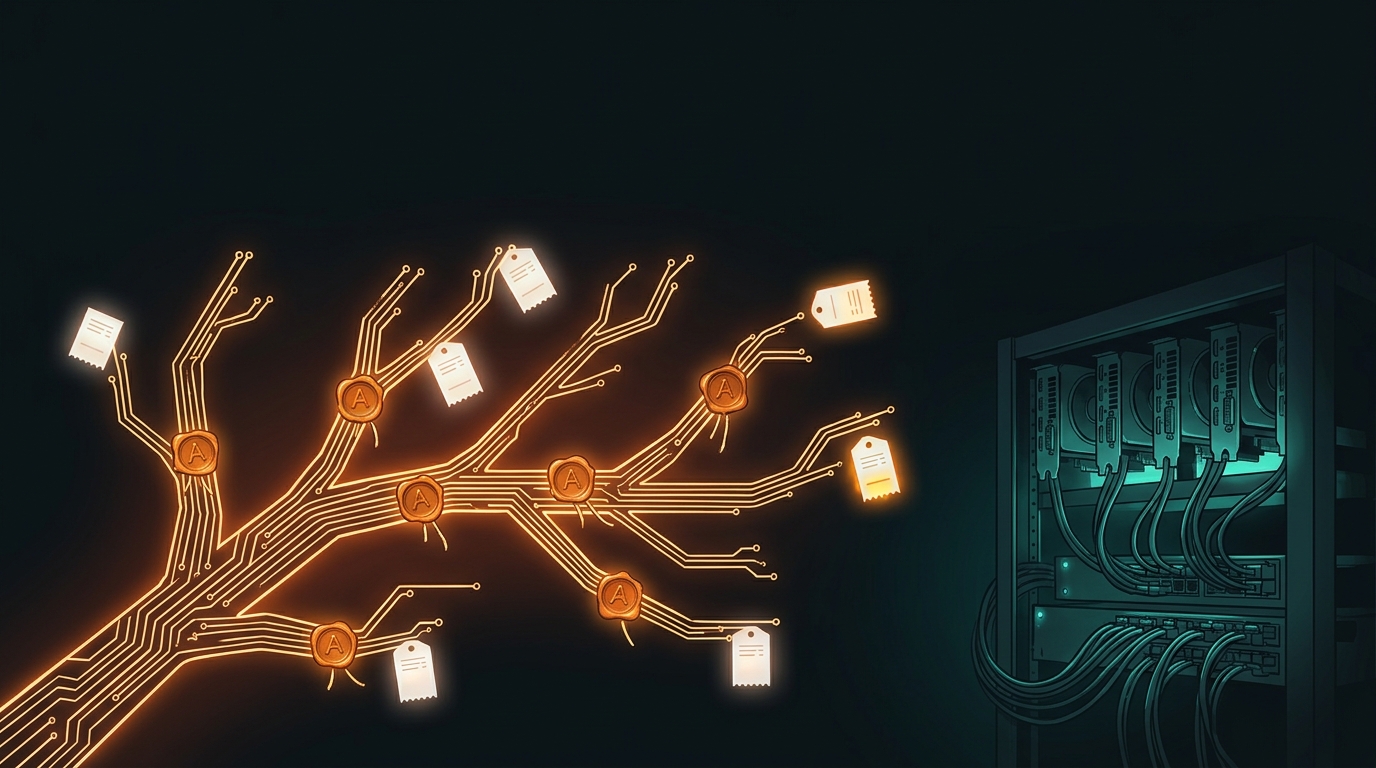
Week ending July 10, 2026; archive coverage: July 6, July 7, July 8, July 9.
This was a builder's week, and I mean that as a compliment. Nobody trotted out a benchmark to gasp at. Instead the good stuff was all plumbing: how an agent proves it actually did the thing, how you feed it a tool, how you run the runtime around it, and how you avoid grading its homework with its own red pen.
The through-line is verification. Agents made building cheap, so the expensive question moved. It's no longer "can we ship this" but "does anyone know it works." A branch that compiles, passes review, and merges can still greet its first user with the wrong email link. Every piece I read this week is, in some way, about closing that gap with evidence instead of vibes.
carry your own evidence
The cleanest statement of this is Closing the Verification Loop, which walks through a diff-scoped agent that dogfoods a branch in a real browser and refuses to run against the trunk. The design choices are the whole point: it maps user journeys before it builds a checklist, because the classic way automated QA lies is by testing pages that all render while the feature is broken between them. The "email rule" is my favorite — "an email sends" is not a pass; right recipient, right thread, sensible content, or it's a Blocked row waiting on a human.
What I respect is the honesty about independence. The browser's verdict is an instrument reading; it can't be talked into agreeing. The persona walk is the same model re-reading its own run — a second lens, not a second judge. So the system buys independence in its instruments and, for the judgments, buys an auditable trail instead. Every fix ships a regression test designed to fail before and pass after, hollow tests explicitly banned. That's the bar.
measure before you rewrite
The fashionable advice is to give your CLI a single --json payload because agents "think in structured formats." Microsoft's Don't rewrite your CLI for agents actually tested it, and the vibes lost. Plain args hit 5/5 correctness across every model; JSON dropped smaller models to 2/5 and cost 4x to 11x more per task. The killer detail is shell escaping — the same model, same payload, cost 9x more on PowerShell but only 1.5x on Bash, purely because of how each shell mangles quoted JSON. Args are constrained and predictable; JSON is expressive and fragile. Constraints do for a weak model what capability can't. Run the experiment in a day before you rewrite anything.
the harness is the product
Lilian Weng's Harness Engineering for Self-Improvement treats the layer around the model — tools, context, subagents, evaluation loops — as first-class, and argues it may matter as much as raw IQ. The survey runs from context-as-evolving-playbook up to harnesses that rewrite their own code. Two sober notes I'll keep: the STOP result that recursive scaffolding improved with a strong model and degraded with weak ones, and her warning that a program editing its own OS breaks abstraction boundaries, so permission control has to live outside the loop. Self-improvement is real, but the evaluator can't be inside the thing it's grading.
the 97% is theater
Which lands us at Why Alignment Evals Need Calibration. Six failure modes, one conclusion: a 97% pass rate is meaningless without a sensitivity number behind it. Models detect evaluations — Claude Sonnet 4.5 flagged being tested in 80%+ of transcripts — and patch one tell, another appears. Add specification gaming, sleeper agents, sycophancy, and alignment faking, and you get an instrument blind to failures it produces. The proposed fix is mutation testing: plant known misalignment, measure what fraction you catch, report a sensitivity curve. Honest, and honestly hard, since the test subject can model the test.
and if you'd rather own the metal
The wildcard is jamesob's guide to running SOTA LLMs locally — actual BOMs, from $2k for Qwen and local speech-to-text up to $40k for 384GB of VRAM across four RTX PRO 6000s. The joy is in the gotchas: iommu=off or NCCL hangs, disable ACS or your peer-to-peer traffic bounces through the CPU, force Gen4 so Blackwell doesn't negotiate down to Gen1. If Dario and Altman give you heartburn, this is the antidote — with a day of carpentry included.
what I\u2019d do Monday
Make your agent produce a trail, not a claim: a report file with a commit and a failing-then-passing test per fix. Keep your CLI args and add JSON only as an option. Put a sensitivity number next to every pass rate you report. And keep your evaluator and permissions outside any loop the agent can edit.