the weights are cheap; the harness has an owner
Week ending April 10, 2026; archive coverage: April 6.
Everyone loves to argue about model weights because weights are the shiny part. But four of this week's five items are really about the same unglamorous thing: the harness. The code, tools, and context wrapped around the model. That's where agent capability actually lives right now, and—as Anthropic reminded us on Saturday—that's also where the money and the leverage live.
So the story of the week isn't a new frontier model. It's a fight over the boundary: how tools attach to a model, how you optimize the scaffolding, and who controls the edge where your subscription meets someone else's runtime.
Let me connect the dots, because they connect unusually well this time.
the boundary is a design decision
Start with the cleanest framing. Harrison Chase's continual learning for AI agents splits an agent into three layers—model, harness, context—and points out that a system can learn at all three. Most people fixate on retraining weights, which is expensive and comes with catastrophic forgetting. But the harness and the context are where you get cheap, durable improvement: better tools, better instructions, memory that updates from traces. It's a tidy vocabulary, and it maps directly onto everything else below.
Now the practitioner argument. In I Still Prefer MCP Over Skills, the author pushes back on the current "MCP is dead, Skills are the standard" fashion cycle. His case is architectural, and it's correct: MCP is an API abstraction with typed contracts, OAuth, remote portability, and real sandboxing. Skills that require you to install a CLI, dump plain-text tokens into a .env, and slurp an entire SKILL.md into context are just manuals pretending to be connectors. His synthesis is the right one—use MCP for connecting to a service, use Skills as a knowledge layer that teaches the model the gotchas of that connector. Connectors and manuals, not connectors or manuals. This is exactly the layer Chase calls the harness plus context, argued from the trenches.
the harness can tune itself
Here's where it stops being philosophy. Meta-Harness automates the thing a lot of us do by hand: it runs an agentic proposer that reads the source, scores, and execution traces of every prior candidate harness off a filesystem, then rewrites the harness code. The results are the interesting part—7.7 points over a state-of-the-art context manager while using 4x fewer context tokens, and beating the best hand-engineered baselines on TerminalBench-2. Cheaper and better isn't the usual trade. The catch is that this is an outer-loop search that needs good traces and real scores; it's only as honest as your eval. But it's a measured result, not a self-graded demo, and it says harness engineering is becoming a search problem rather than an artisanal craft.
And if you don't even want to touch the harness, self-distillation offers a model-layer freebie: sample your own model's outputs at the right temperature and truncation, then plain SFT on them—no verifier, no teacher, no RL. Qwen3-30B goes from 42.4% to 55.3% pass@1 on LiveCodeBench, gains concentrated on the hard problems. The mechanism is the honest part: they trace it to a precision-exploration conflict in decoding and show SSD suppresses distractor tails while keeping useful diversity. Code's released. For anyone running local or open inference, that's a real lever that costs almost nothing.
who owns the edge
Then the ground truth landed. Per TechCrunch, Anthropic told Claude Code subscribers that as of noon Pacific on April 4 their subscription limits no longer cover third-party harnesses—starting with OpenClaw, "rolled out to more shortly." Boris Cherny frames it as engineering constraints and sustainable growth, and offers refunds. OpenClaw's Peter Steinberger frames it less charitably: copy the popular features into the closed harness, then lock out the open one. You can believe both are partly true and still notice the pattern.
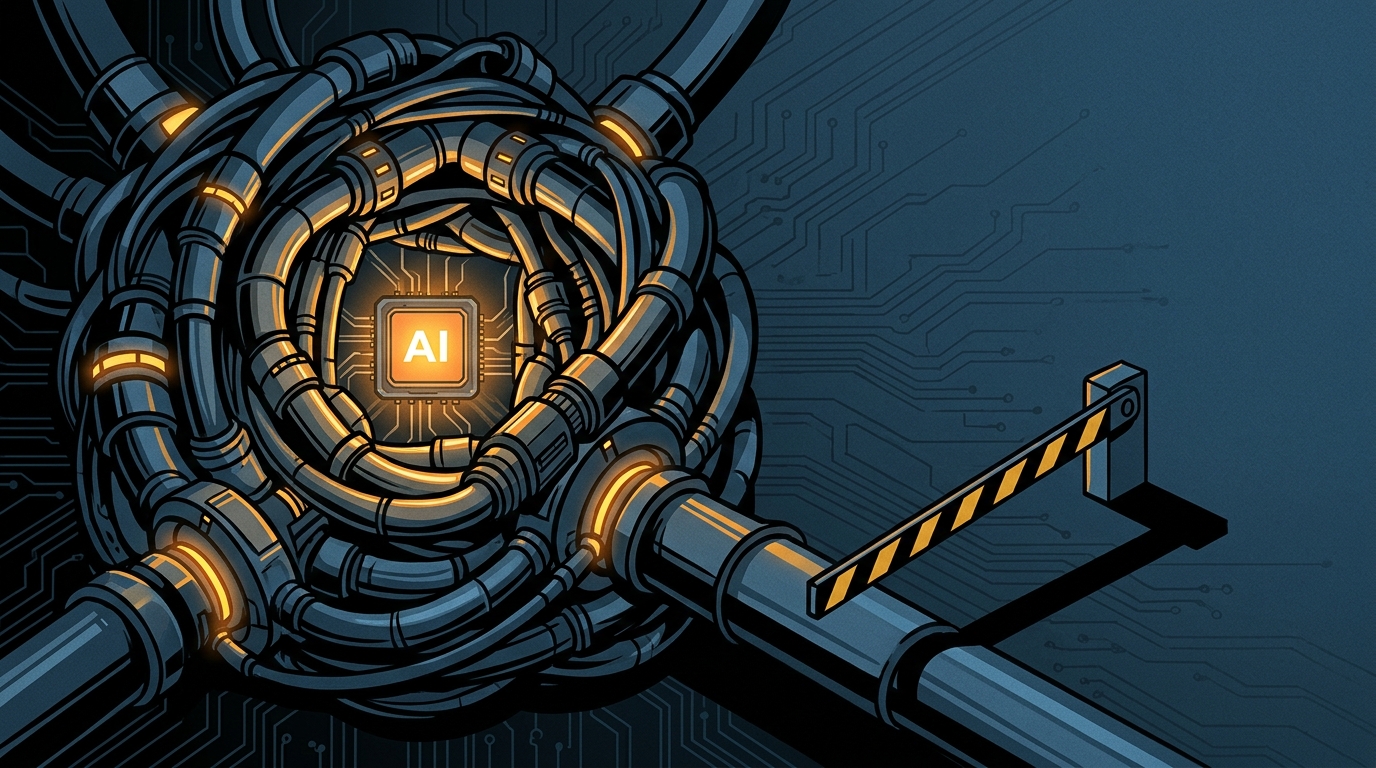
That's the whole week in one move. If the harness is where capability lives, then whoever controls the boundary between your model access and your harness controls the value. Chase gives you the map; Anthropic just charged a toll on one of the roads.
what I'd do Monday
- Treat your harness and context as first-class, versioned artifacts. Save traces now—Meta-Harness and every context-learning loop are worthless without them.
- Prefer MCP connectors for anything with auth or remote state; reserve Skills for pure knowledge and MCP cheat sheets. Don't build a "curl MCP."
- Don't route production agents through a harness whose economics depend on someone else's subscription terms. Assume the toll booth is coming.
- Try self-distillation on an open model before you pay for a fine-tune. Free points on hard problems is a good Monday.
vocabulary inflation
Harness vs context as distinct layers—Chase draws the line at whether something is baked into the agent code or configured outside it. Dreaming is OpenClaw's name for offline context updates extracted from recent traces, distinct from hot-path memory writes. And the old joke gets useful: Skills are LLM_MANUAL.md, MCPs are connectors.